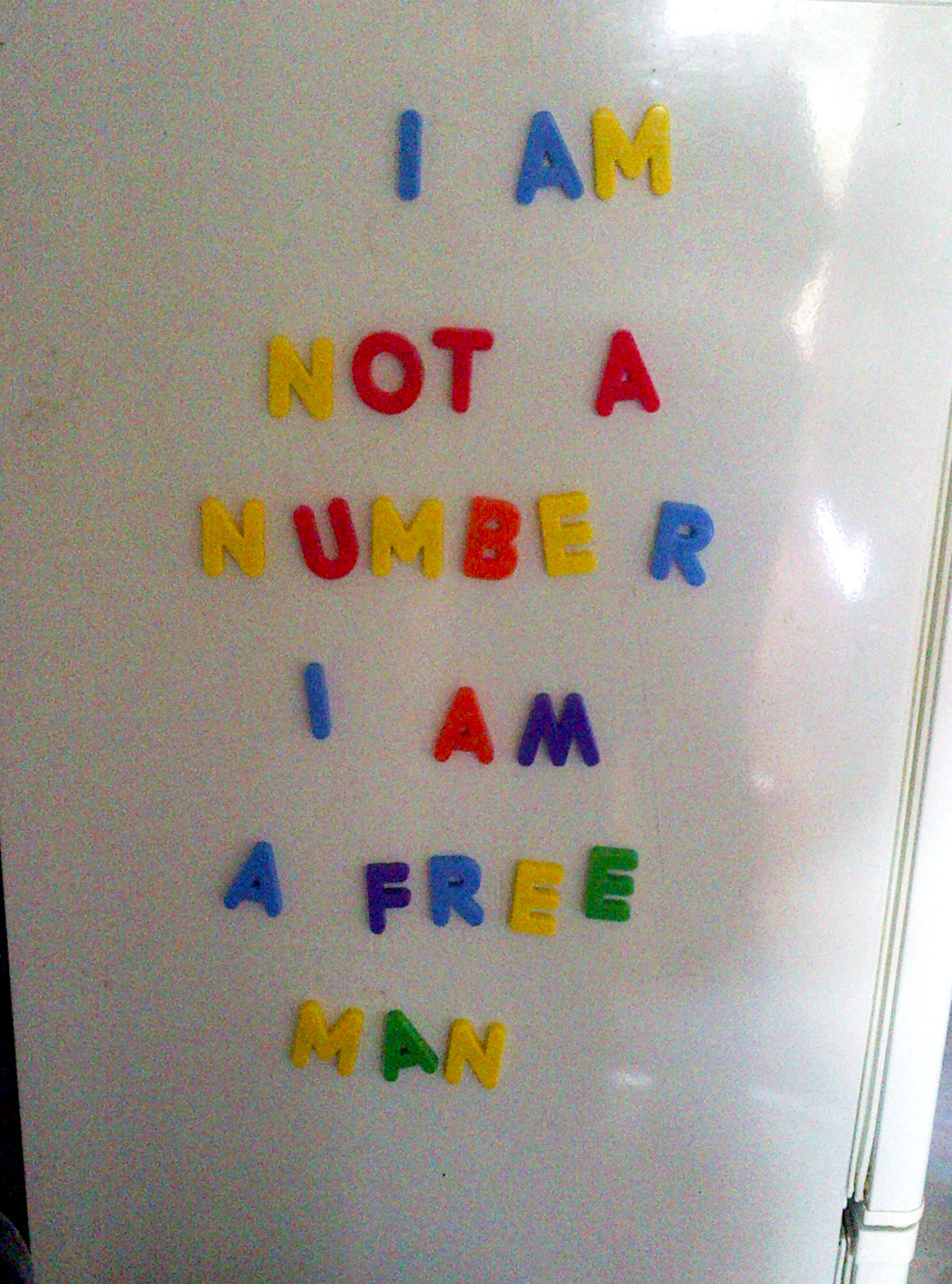
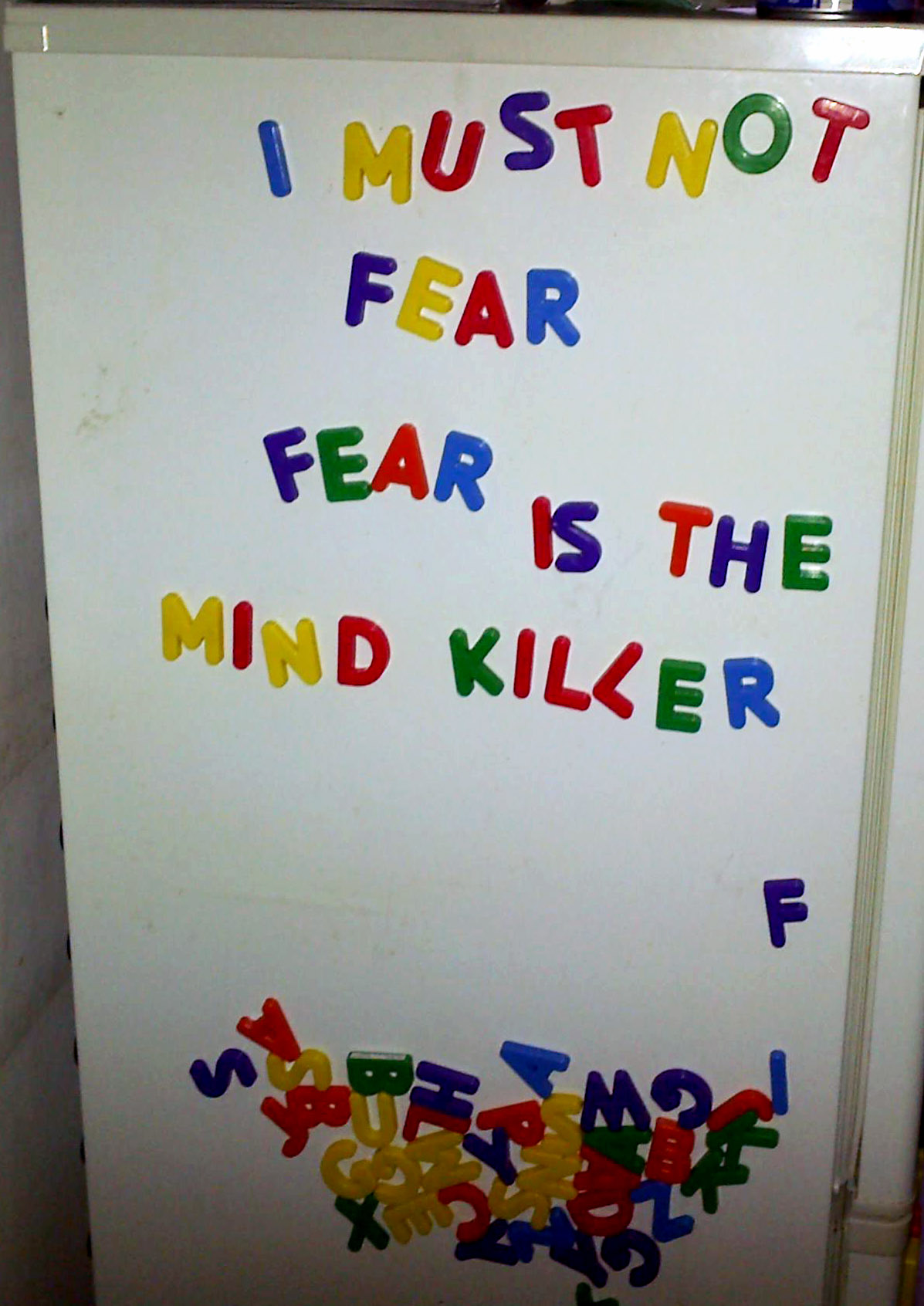
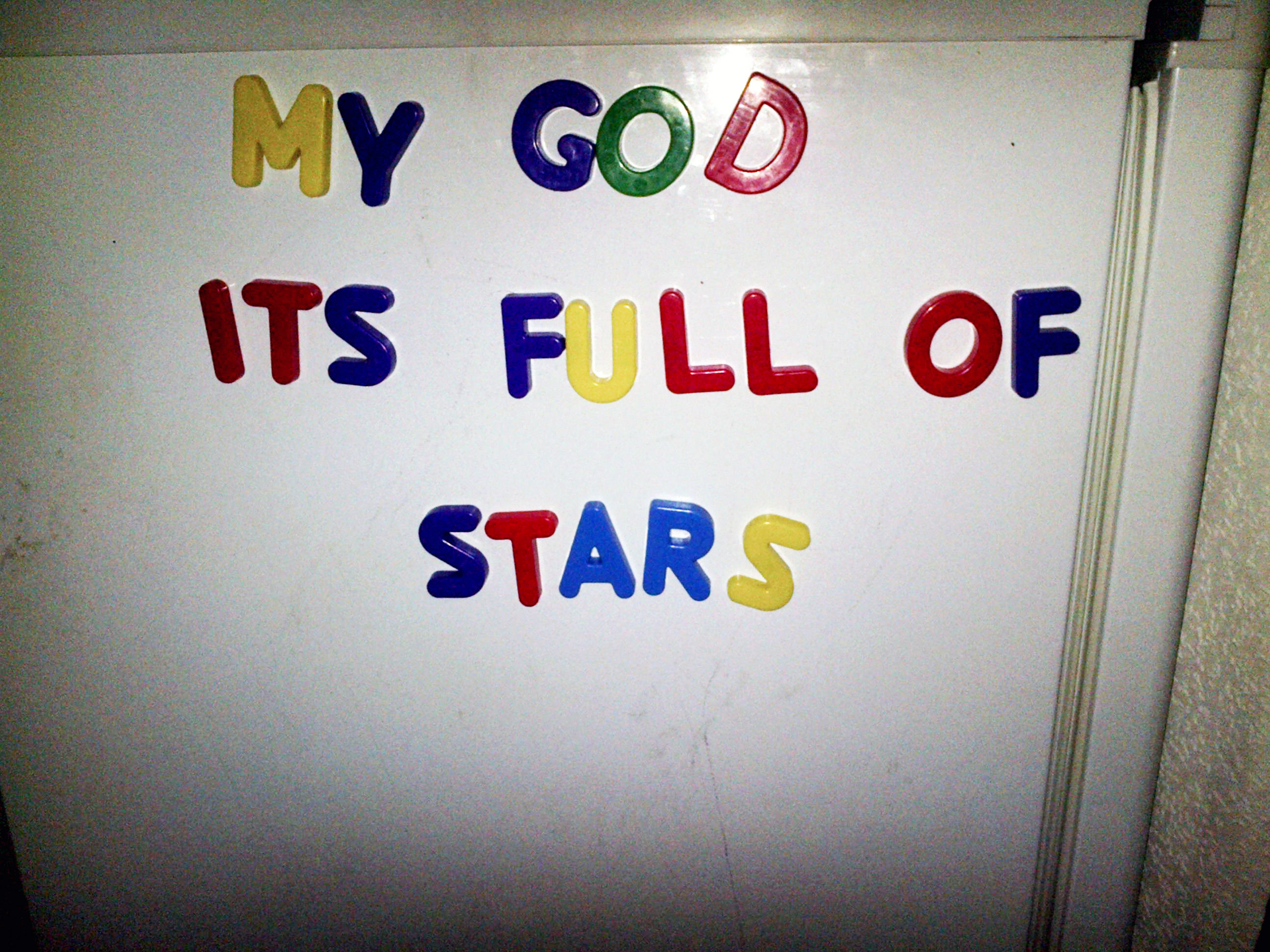
(I’m using Aurora’s oversized green keyboard for this post. It’s not as easy as you’d think.  )
)

I know it’s popular to review things at the end/start of every year and as loath as I am to share these days – have you noticed the tumbleweed blowing across the site this year? – perhaps it’ll do the ol’ noggin some good to commit things to the blog.
Writing
It’s the ever-present elephant in the room, isn’t it?
Writing last year has happened in fits and starts. Still more than the previous year, but nothing finished to a standard I was happy with and nothing submitted for consideration. I have, however, attended the last Glasgow Science Fiction Writers Circle meeting of 2013 and I’m thinking it’s a good idea to keep going. I know a few people who regularly attend and they’re the good sort. Next meeting is Tuesday the 7th of January. If I get something finished in the next day or two I might submit it for their review process. They don’t seem to have anything currently set for that day and I’m tempted to do something for this month’s submission theme for Crossed Genre Magazine. The theme is food. I have an idea. If I can get the bones of it done tomorrow, as Aurora is at the in-laws tomorrow and I don’t yet have a shift for work then I’ll let them have at it.
And, I was going to forget, I had created two e-books this year. That was exciting. The process was pretty straightforward and I have it in mind to do a few more, of greater lengths, this year. Given inspiration and time, of course.
I keep meaning to promote the bloody things but there have always been reasons not to. Often these reasons are fear and doubt. It’s amazing how much anxieties stop you from achieving what you want, isn’t it? More on that later perhaps.
But what’s the worse that can happen if I push my own work? People wont like it. Oh, well that’s a shame. However would I cope? ( I really should have enclosed those last sentences in a < sarcasm > tag, eh?) I’m fully aware that i don’t write stories that everyone would like. That’s fine. I don’t like a lot of what passes for popular these days anyway.
To be honest, I’m kind of concerned that my breakthrough “giant snakes” novel will be well received. I’m not sure the world is ready for giant snake fiction. Perhaps, just perhaps, the world IS ready.

Work
I’m going to have to do something different this year.
At the moment, work is an issue. And I’m talking about the lack of it.
I do care work for an agency, filling in where required across Glasgow for a variety of other organisations. Often they have asked for me to return, which is brilliant as it shows I’m not totally useless at the job, but there just isn’t enough work to go round. With the slashing of care budgets for vulnerable people there are less shifts to cover and I can imagine they are snapped up by their own staff with an increased eagerness before they are farmed out to an agency. Don’t get me wrong, despite the lack of work the agency are a good bunch but there’s only so much they can do.
This week I have one shift. It’s a day shift, which is always a winner, but it’s split between two service users across north-east Glasgow. A shift or two a week does not do much for the home financial situation. And as Ruth only works part time, earning barely enough to cover the bills, it falls upon myself to magic up work from somewhere.
Have I been applying for new jobs? You bet your arse I have. As yet, not even an interview but as I increase the rate I’m sending out my C.V. and application forms, something has to break. As long as it’s not me.
Today I’m cautiously optimistic but with no reason to be while yesterday I wasn’t optimistic in the slightest with many reasons not to be. Go figure. Where there’s life, there’s hope.
Mental Health
This is always fun…
Life is good today. The first day of the year has gone well. So far, 2014 is a winner!
The first half of the year was patchy, with small ups and downs littering the months. The latter half was a different bag entirely. After Ruth left her job in the Whitench Centre the mood in the flat IMPROVED DRAMATICALLY. Okay, so we’re even tighter for funds than we ever have been but I’d rather that than have her in the bloody place any longer.
I’ll only say of the place that it’s a badly managed shambles and the management committee are a disgrace. They have stumbled from one poorly thought decision to another. It’s a shame as the place has so much potential. But I’ve said more than I meant to. Heh.
Also, Alan McWilliam, my arch-nemesis from Whiteinch Church is on the committee. No small wonder it’s a shambles.
On that note, Whiteinch Church. Four years since our unceremonious departure from that cult. I had a wobble that lasted about a week at the end of November, the anniversary of the whole bloomin’ thing. It’s not good that I’m still dealing with the fallout from leaving there but it IS good that it only lasted a week.
Anything else?
I’m not sure. I dare say that once this has been posted to the blog something else will occur to me but that’s all for now.
I suppose I AM positive for the future. Isn’t that the best any of us can ask?
Right, I’m done. Can I have my keyboard back please?